When buying honey, one question comes up more than any other:
“How do I know if this honey is real?”
With so many products on the market, it’s understandable that consumers want to know whether the honey in their jar is genuine or simply sugar syrup disguised as honey. While there are many “home tests” shared online, most of them are unreliable and can lead to the wrong conclusion.
Here are the facts every honey lover should know.
1. Buy Honey from a Trusted Beekeeper
The most reliable way to ensure you’re buying authentic honey is to know who produced it.
Reputable beekeepers are proud to explain where their bees forage, how the honey is harvested, and when it was extracted. Local producers who care for their own bees have a reputation to protect, making transparency one of the best indicators of quality.
2. Real Honey Crystallizes
One of the biggest myths is that crystallized honey has “gone bad.”
In reality, crystallization is a natural process and often a sign that honey has not been excessively processed. Depending on its natural composition, some types of honey crystallize within weeks, while others remain liquid for months.
Crystallized honey is still delicious and perfectly safe to eat.
3. Aroma and Flavor Matter
Pure honey has a complex aroma that reflects the flowers visited by the bees.
Instead of tasting only sweet, authentic honey often contains floral, herbal, fruity, or woody notes depending on its botanical origin. Every harvest is slightly different because nature is never exactly the same.
4. Ignore Internet “Honey Tests”
You may have seen videos claiming that real honey:
- burns with a match,
- sinks in water,
- forms a hexagon,
- wraps around a spoon,
- or never dissolves.
These demonstrations may look convincing, but none of them can reliably prove whether honey is pure or adulterated. Genuine honey can behave differently depending on its moisture content, floral source, temperature, and age.
5. Laboratory Testing Is the Only Definitive Proof
The only way to scientifically determine whether honey has been adulterated with sugar syrups is through laboratory analysis.
Professional laboratories can examine honey’s composition, sugars, enzymes, pollen, moisture, and other characteristics to verify its authenticity.
6. Choose Quality Over the Lowest Price
Producing real honey requires healthy bee colonies, suitable weather, flowering plants, time, and countless hours of work by both bees and beekeepers.
If a product is significantly cheaper than genuine local honey, it’s worth considering why. Authentic honey is a natural food that cannot be produced quickly or cheaply.
Why We Believe in Authentic Honey
At Rural Apiary Kovačević, our family has cared for bees for more than four generations beneath the sunny skies of Herzegovina. Every jar of our certified organic honey is harvested with respect for nature, our bees, and the traditions passed down through generations.
We believe the best honey doesn’t need tricks to prove its authenticity—it simply needs honest beekeeping, healthy bees, and the patience to let nature do its work.
When you choose honey directly from a trusted beekeeper, you’re not only enjoying a remarkable natural product—you are also supporting biodiversity, sustainable agriculture, and rural communities.
Because real honey begins with real bees.
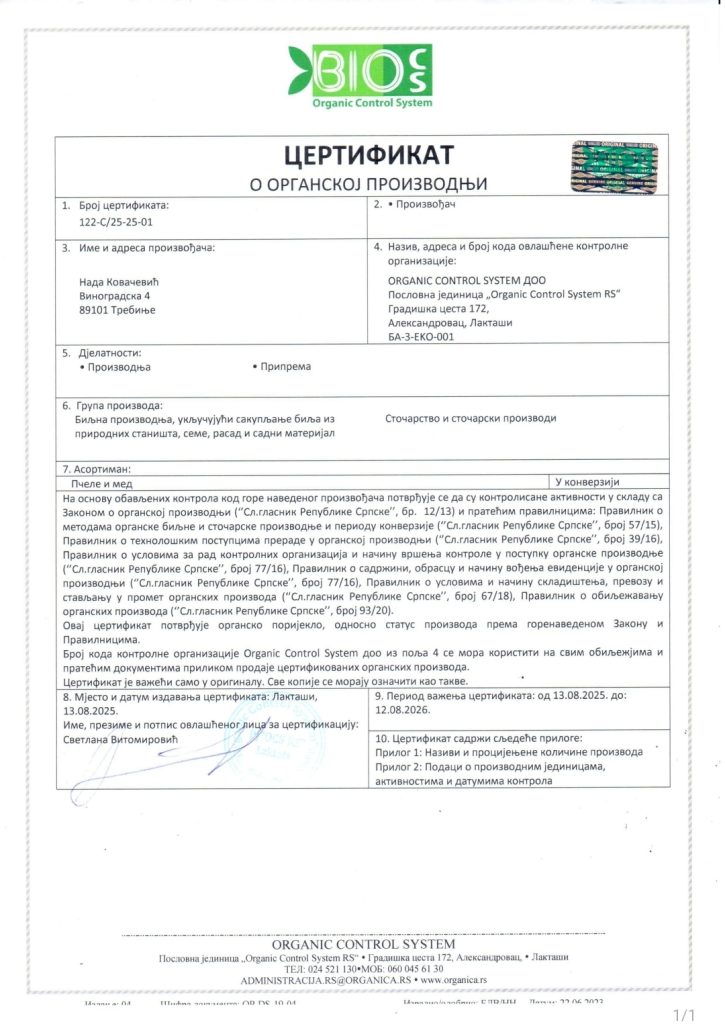
Certified Organic Honey You Can Trust
At Rural Apiary Kovačević, authenticity is backed by more than tradition—it is supported by organic certification. Our honey is produced in accordance with certified organic beekeeping standards, ensuring that every step, from hive management to harvesting and packaging, meets strict quality and sustainability requirements.
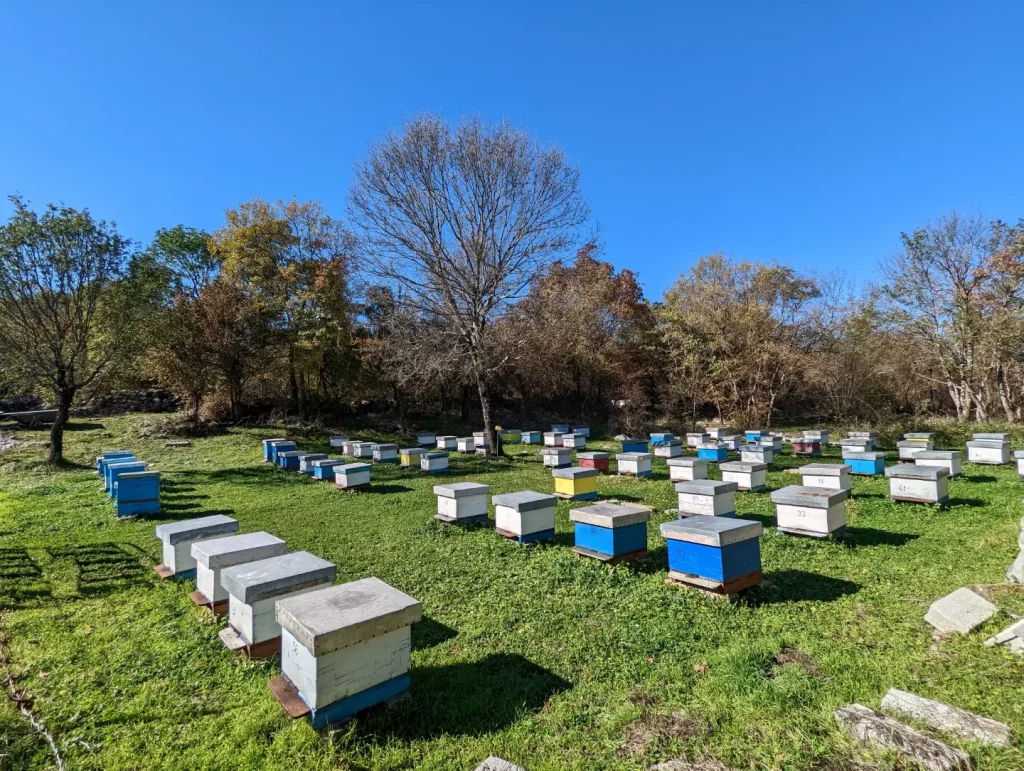
Our bees forage in the unspoiled landscapes of Herzegovina, where the rich diversity of wildflowers and aromatic herbs gives our honey its distinctive character. By choosing our certified organic honey, you can be confident that you are enjoying a genuine product made with respect for nature, our bees, and four generations of family beekeeping.